
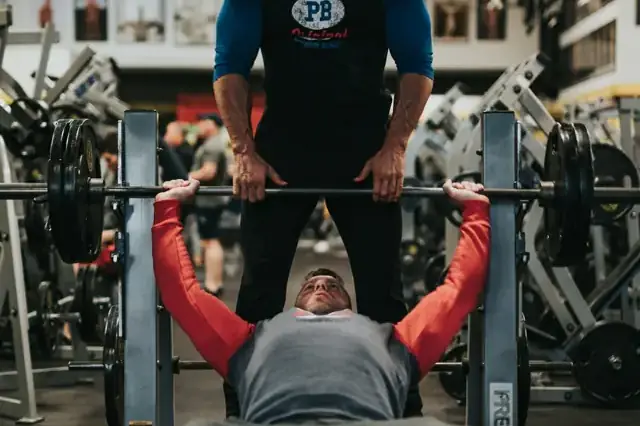
Chest exercise
Bench Press
The bench press is the classic upper body strength lift. Lying on a bench lets you press heavy loads safely, making it one of the best tools for building the chest, front shoulders and triceps.
 By Khushi Gupta Reviewed October 2026
- Primary
- Chest
- Also works
- Front delts, Triceps, Lats
- Equipment
- Barbell, flat bench, rack
- Level
- Beginner
How to do it
- Lie on the bench with your eyes directly under the bar. Plant your feet flat on the floor, slightly behind your knees.
- Grip the bar slightly wider than shoulder width so your forearms are vertical when the bar touches your chest.
- Squeeze your shoulder blades together and down, and create a small natural arch in your upper back. Your glutes stay on the bench.
- Unrack the bar with straight arms and bring it over your shoulders.
- Take a breath and lower the bar under control to your lower chest, around the nipple line, with elbows tucked about 45 to 70 degrees from your torso.
- Touch the chest lightly without bouncing.
- Press up and slightly back toward your face, driving your feet into the floor, until your arms are straight over your shoulders.
Coaching cues
- Shoulder blades back and down
- Bend the bar
- Leg drive into the floor
- Wrists stacked over elbows
Common mistakes and fixes
Flared elbows at 90 degrees
Tuck the elbows to roughly 45 to 70 degrees. This is stronger and easier on the shoulder joint.
Bouncing the bar off the chest
Lower under control and touch. If you need a bounce, the weight is too heavy.
Glutes lifting off the bench
Push the floor away toward your head rather than straight down, and keep your hips in contact.
Loose upper back
Set your shoulder blades before unracking and keep them pinned for the whole set.
Benching heavy with no spotter or safeties
Use safety arms set at chest level or ask for a spot. Never use collars when benching alone without safeties.
Sets and reps
| Goal | Prescription |
|---|---|
| Strength | 3-5 sets of 3-6 reps, 3-4 minutes rest |
| Hypertrophy | 3-4 sets of 6-12 reps, 2 minutes rest |
| Beginner | 3 sets of 5 reps, adding 2.5 kg (5 lb) per session |
Pick a starting weight with the one rep max calculator, and load the bar with the plate calculator.
Variations
- Close grip bench press Hands at shoulder width to shift more work to the triceps.
- Incline bench press A 30 degree bench emphasises the upper chest and front delts.
- Dumbbell bench press Each arm works independently and you get a deeper stretch.
- Paused bench press A one-second pause on the chest removes bounce and builds strength from the bottom.
Muscles worked
The pectoralis major is the main mover. It brings your upper arm across and toward your body, which is exactly what pressing the bar up does.
Your front deltoids assist through the whole range and your triceps take over near lockout. Your lats and upper back stabilise the bar and help control the descent.
Benefits
The bench press lets you overload the chest more than push-ups or flyes, which makes it reliable for building size and strength. It is also easy to progress in small steps, and you can track your strength with the 1RM calculator.
Pair it with a pulling movement such as the barbell row to keep shoulder health and posture balanced.
Safety and who should modify it
Most bench press injuries come from failing a rep with no safeties. Set the rack safety arms just below chest height, or have a spotter for heavy sets.
If you have shoulder pain, try a slightly narrower grip, a neutral grip with dumbbells, or a floor press to limit the range. Persistent pain is worth checking with a physiotherapist.
Frequently asked questions
Where should the bar touch my chest?
Usually on the lower half of the chest, around the nipple line or slightly below. Your forearms should be close to vertical at the bottom.
Is arching in the bench press cheating?
A moderate arch with your glutes on the bench is legal in powerlifting and helps keep the shoulders in a safer position. An extreme arch is optional and not needed for general training.
How much should I be able to bench?
It depends on bodyweight, training age and genetics. Compare your lifts to people of the same bodyweight with the Wilks calculator rather than to general internet numbers.
Bench press or dumbbell press for chest growth?
Both work well. Barbells allow heavier loads; dumbbells allow more range and fix side-to-side imbalances. Many programmes use both.
Plans that use the bench press
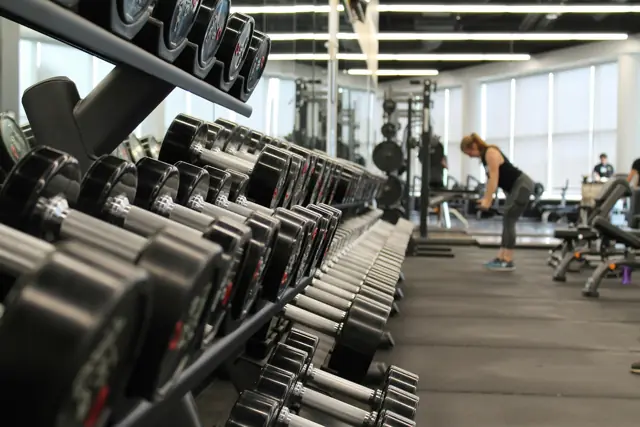 Intermediate · Muscle gain
Push Pull Legs Split
A 6-day push pull legs routine for building muscle. Full schedule with sets, reps and rest times, plus how to progress, deload and adjust it.
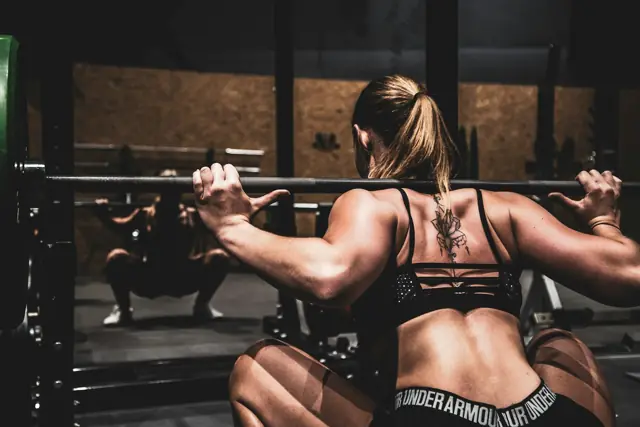 Beginner · Strength
5x5 Strength Program
A 3-day 5x5 barbell program built on squats, presses, rows and deadlifts. A and B workouts, linear progression rules, and how to handle stalls.
Related exercises
Chest · Beginner
Incline Dumbbell Press
Dumbbells, adjustable bench
 Chest · Beginner
Push-Up
None (bodyweight)
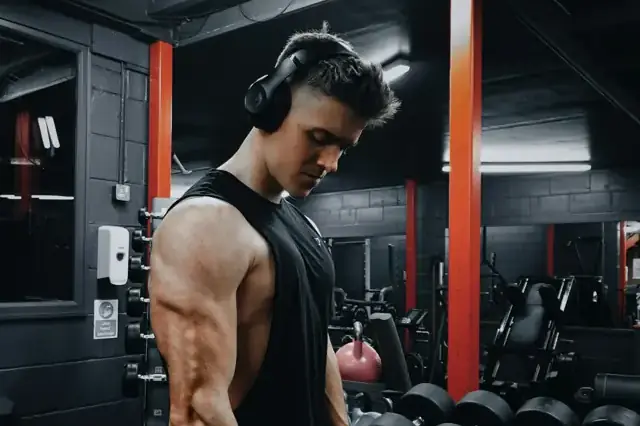 Arms · Intermediate
Tricep Dip
Parallel bars or dip station