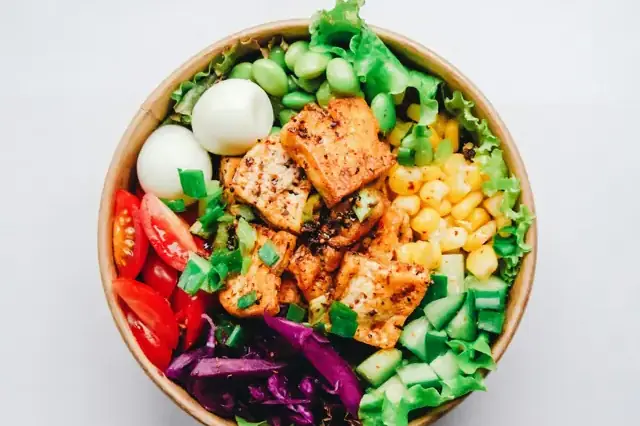
What macros are and why they matter
Macronutrients are the three nutrients that supply calories: protein and carbohydrate at 4 kcal per gram and fat at 9 kcal per gram. Your total calories decide whether your weight goes up or down. Your macros shape what that weight is made of and how you feel and train along the way.
For lifters, protein is the one to get right first. It protects muscle in a deficit and supplies the raw material for growth in a surplus. Carbs and fat are more flexible and can be set to suit your preferences.
How to use the calculator
Enter sex, age, height, weight and activity level so the tool can work out your maintenance calories. Then choose two things:
- Goal: cut (maintenance minus 20%), maintain, or lean bulk (maintenance plus 10%).
- Diet style: balanced, low carb, high carb or keto, which changes how the non-protein calories are shared between carbs and fat.
You get grams and calories for each macro, plus what that looks like split over three, four or five meals.
How the numbers are calculated
The calculator sets the macros in a fixed order so protein is never squeezed out.
- Calories: maintenance from Mifflin-St Jeor x activity, then adjusted for your goal.
- Protein: 2.0 g per kg body weight when cutting, 1.8 g/kg when maintaining or bulking.
- Fat: a share of total calories set by the diet style.
- Carbs: whatever calories are left, divided by 4.
Protein (g) = body weight (kg) x 2.0 or 1.8
Fat (g) = calories x fat share / 9
Carbs (g) = (calories - protein g x 4 - fat g x 9) / 4
On keto the order flips for carbs and fat: carbs are capped at about 5% of calories and fat fills the remainder.
The four diet styles compared
| Style | Fat | Carbs | Best for |
|---|---|---|---|
| Balanced | 25% of kcal | Remainder | Most people, most goals |
| Low carb | 40% of kcal | Remainder | People who prefer fattier foods or feel fuller on them |
| High carb | 20% of kcal | Remainder | High training volume, endurance work, bulking |
| Keto | Remainder | About 5% of kcal | People who do well with very low carbs |
When calories and protein are equal, controlled studies show very little difference in fat loss between high and low carb diets. The best split is the one you can follow. Lifters with heavy training volume usually perform better with more carbohydrate, since it refuels muscle glycogen.
Worked example
An 80 kg (176 lb) man with a maintenance of 2,700 kcal chooses cut and balanced. His target is 2,160 kcal (2,700 x 0.8).
- Protein: 80 x 2.0 = 160 g (640 kcal)
- Fat: 2,160 x 0.25 / 9 = 60 g (540 kcal)
- Carbs: (2,160 - 640 - 540) / 4 = 245 g (980 kcal)
Over four meals that is about 40 g protein, 15 g fat and 61 g carbs each.
Limitations
Protein is set per kilogram of total body weight. If you carry a lot of body fat, that can produce a very high number; basing it on your goal weight is a sensible alternative. The protein calculator explains the ranges in more depth.
Fat should rarely drop below about 0.5 g per kg for long, as very low fat intakes can affect hormone health. Keto is not suitable for everyone, including people on some diabetes medications; check with your doctor first.
Hit your calories and protein every day. Being 20 g off on carbs or fat makes almost no difference.
Adjusting macros as you go
Your first set of macros is a starting point. Review it every two to four weeks using three signals: the trend in your weekly average weight, how your training is going, and how hungry you are.
- Weight not moving as planned: change calories first, by 100 to 200 kcal, taking it from or adding it to carbs or fat. Leave protein alone.
- Training feels flat in a cut: move some calories from fat to carbs, especially around sessions.
- Constantly hungry: keep protein high, add more high-volume foods like vegetables and potatoes, and consider a slightly smaller deficit.
- After losing 4-5 kg (about 10 lb): recalculate, because your maintenance and protein target have both dropped.
Tracking does not need to be perfect to work. Weighing foods for a few weeks teaches you what portions look like, and many people can then estimate well enough to keep progressing without logging every meal.
Putting it into practice
Build each meal around a protein source, then add carbs and fat to fill the plate. Our guide to pre and post workout nutrition shows how to time carbs around training, and how much protein to build muscle covers sources and timing.
Pair your macros with a structured plan such as the upper/lower split and check progress every few weeks with the body fat calculator.
Frequently asked questions
What is the best macro ratio for fat loss?
There is no single best ratio. Keep protein high, around 2 g per kg, stay in a calorie deficit, and split the rest between carbs and fat in whatever way you can sustain.
Do I have to hit my macros exactly?
No. Aim to hit calories and protein within about 5-10%. Small daily variation in carbs and fat does not matter.
Why is my protein the same on different diet styles?
Protein is set by body weight and goal, not by diet style. The style only changes how the remaining calories are split between carbs and fat.
Is keto better for building muscle?
Generally not. Most lifters train harder and recover better with more carbohydrate, especially during a bulk. Keto can work for fat loss if you prefer it.
How many meals should I split my macros into?
Three to five meals work for most people. Getting 25-40 g of protein in each meal is a practical target for muscle growth.
References
- Jäger R, Kerksick CM, Campbell BI et al. International Society of Sports Nutrition Position Stand: protein and exercise. J Int Soc Sports Nutr. 2017;14:20
- Hall KD, Guo J. Obesity energetics: body weight regulation and the effects of diet composition. Gastroenterology. 2017;152(7):1718-1727
- Helms ER, Aragon AA, Fitschen PJ. Evidence-based recommendations for natural bodybuilding contest preparation: nutrition and supplementation. J Int Soc Sports Nutr. 2014;11:20
Results are estimates for healthy adults and are not medical advice. See our medical disclaimer.