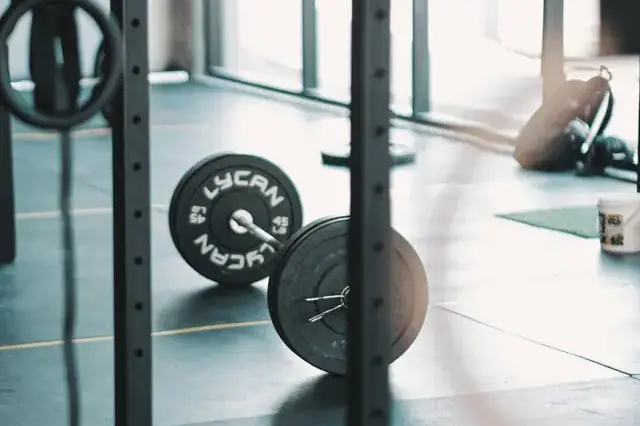
What the plate calculator does
Loading a barbell is simple until it is not: a new gym with different plates, a percentage from your program that lands on an awkward number, or a switch between kilograms and pounds. This tool takes the target and works out the fewest plates per side to hit it.
It draws the bar so you can check at a glance, and if the exact weight cannot be loaded with the plates you have, it tells you the closest weight you can make and how much is left over.
How to use it
- Choose kilograms or pounds.
- Pick your bar: 20 kg, 15 kg or 10 kg, or 45 lb or 35 lb.
- Untick any plates your gym does not have. Kilogram sets include 25, 20, 15, 10, 5, 2.5 and 1.25 kg; pound sets include 45, 35, 25, 10, 5 and 2.5 lb.
- Tick the collars option if you use 2.5 kg competition collars, which weigh 2.5 kg each and count towards the total.
- Enter your target and read off the plates for one side.
Need a target first? Take a percentage of your max from the one rep max calculator and drop it in here.
How the calculation works
Per side = (target − bar − collars) / 2
The calculator then works greedily from the heaviest plate down, adding as many of each as fit into the remaining weight. With standard plate sets this always gives the fewest plates possible.
Example: 142.5 kg on a 20 kg bar with no collars leaves 122.5 kg, or 61.25 kg per side. That is 25 + 25 + 10 + 1.25 kg on each side.
Plate colours and loading order
Always load the heaviest plates first, closest to the inside sleeve, and work outwards to the lightest. This keeps the bar stable, makes plates easier to read from a distance and is required in competition.
International Weightlifting Federation (IWF) and most powerlifting federations use a standard colour code for kilogram plates, which many commercial gyms copy:
| Plate | Colour | Per side for 100 kg on a 20 kg bar |
|---|---|---|
| 25 kg | Red | 1 plate (25 kg) |
| 20 kg | Blue | - |
| 15 kg | Yellow | 1 plate (15 kg) |
| 10 kg | Green | - |
| 5 kg | White | - |
| 2.5 kg | Red (small) | - |
| 1.25 kg | Silver/chrome | - |
So 100 kg is a red and a yellow on each side. Learn the colours and you can check a training partner's bar in a second.
Calibrated plates vs bumper plates
Calibrated steel plates are machined to within a few grams of their stated weight and are thin, so you can fit a lot on the bar. They are used in powerlifting and are what the colour code above describes.
Bumper plates are thick rubber, designed to be dropped from overhead in Olympic lifting and CrossFit. Their thickness means a loaded bar runs out of sleeve space sooner, and cheap bumper and iron plates can be off by several percent. If your numbers seem to drift between gyms, plate accuracy is a likely reason.
Pound and kilogram plates are not interchangeable. A 45 lb plate is 20.4 kg, slightly more than a blue 20 kg plate. Mixing them quietly changes your load.
Microloading for steady progress
As you get stronger, adding 5 kg to a lift every week stops being realistic. Fractional plates of 0.5 kg, 1 kg or 1.25 kg let you add 1-2.5 kg per session, which keeps progressive overload going on pressing movements in particular.
If your gym only goes down to 2.5 kg, the smallest jump is 5 kg. In that case, add reps before adding weight: move from 3 sets of 5 to 3 sets of 6 or 7, then increase the load. The 5x5 strength program explains how to progress when jumps stall.
Quick reference: common loads
These are the most common working weights on a 20 kg bar without collars. Plates listed are for one side, loaded heaviest first.
| Total | Per side | Plates per side |
|---|---|---|
| 40 kg | 10 kg | 10 |
| 60 kg | 20 kg | 20 |
| 80 kg | 30 kg | 25 + 5 |
| 100 kg | 40 kg | 25 + 15 |
| 120 kg | 50 kg | 25 + 25 |
| 140 kg | 60 kg | 25 + 25 + 10 |
| 160 kg | 70 kg | 25 + 25 + 20 |
| 180 kg | 80 kg | 25 + 25 + 25 + 5 |
| 200 kg | 90 kg | 25 + 25 + 25 + 15 |
In pound gyms the classic milestones are one plate (135 lb: a 45 lb plate a side), two plates (225 lb), three plates (315 lb) and four plates (405 lb), all on a 45 lb bar.
Warm-ups are where a plate calculator saves the most time. A common pattern is the empty bar for 10 reps, then roughly 40%, 60%, 75% and 85-90% of your working weight for fewer reps each set. Enter each of those numbers and load straight from the result instead of guessing and rounding mid-session.
When stripping a heavy bar, take one plate off each side alternately. Unloading one side completely can tip the bar off the rack.
Bar weights and limitations
A men's Olympic bar weighs 20 kg and a women's 15 kg. Many gyms also have 10 kg technique bars and fixed EZ or straight bars that can weigh anything. If you are not sure, weigh it or ask. Smith machines and some trap bars have a different effective weight because of counterbalancing or their design.
The calculator assumes plates are accurate to their label and that you load both sides identically. Use spring clips or collars for safety on every lift, even if they are not counted in the total.
Frequently asked questions
How much does an Olympic barbell weigh?
A men's Olympic barbell weighs 20 kg (about 44 lb) and a women's weighs 15 kg (about 33 lb). In pound gyms, standard bars are listed as 45 lb.
Do collars count towards the total weight?
Competition collars weigh 2.5 kg each and are counted in powerlifting and weightlifting. Light spring clips are usually ignored. Tick the collar option only if you use the 2.5 kg type.
Why should heavy plates go on first?
Loading the heaviest plates closest to the centre keeps the bar balanced, makes the load easy to read and is standard in competition. It also stops small plates getting trapped behind big ones.
What if I cannot load the exact weight?
The calculator shows the closest loadable weight and the remainder. Either round to that, add fractional plates or add a rep instead of weight.
Are 45 lb and 20 kg plates the same?
No. A 45 lb plate is about 20.4 kg. The difference is small per plate but adds up on a heavy bar, so avoid mixing pound and kilogram plates.
References
- International Weightlifting Federation. Technical and Competition Rules & Regulations.
- International Powerlifting Federation. Technical Rules Book.
Results are estimates for healthy adults and are not medical advice. See our medical disclaimer.