
Calculators for this guide:
BMI CalculatorBody Fat CalculatorFFMI CalculatorWaist-to-Hip Ratio CalculatorWhat BMI measures
Body mass index is your weight divided by your height squared. It was devised in the 1830s by the Belgian statistician Adolphe Quetelet to describe populations, not to diagnose individuals.
BMI = weight (kg) / height (m)²
BMI = 703 x weight (lb) / height (in)²
| BMI | WHO category |
|---|---|
| Below 18.5 | Underweight |
| 18.5-24.9 | Healthy weight |
| 25.0-29.9 | Overweight |
| 30.0 and above | Obesity |
Some health bodies use lower cut-offs for people of South Asian, Chinese and other Asian backgrounds, because cardiometabolic risk tends to rise at lower BMIs. India's guidelines, for example, treat 23 as the start of overweight. You can check your own figure with the BMI calculator.
Why BMI works for most people
BMI gets criticised a lot, but it earns its place. It needs only a tape measure and a scale, it is free, and across large groups of people it tracks reasonably well with body fat and with the risk of type 2 diabetes, heart disease and early death.
For the average sedentary adult, a BMI of 32 almost always means excess body fat. In that situation, the extra precision of a body fat test rarely changes the advice.
Where BMI gets it wrong
BMI cannot tell muscle from fat. It also says nothing about where fat is stored, which matters more for health than how much there is.
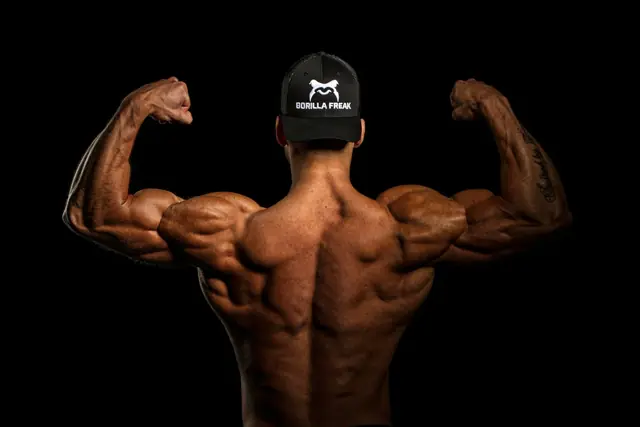
- Muscular lifters. A 180 cm man at 90 kg and 12% body fat has a BMI of 27.8, labelled overweight, despite being lean.
- "Normal weight" with high body fat. Someone with little muscle can sit at a BMI of 23 while carrying 30%+ body fat, sometimes called normal-weight obesity.
- Older adults. Muscle loss with age can keep BMI stable while body fat quietly rises.
- Fat distribution. Two people with identical BMIs can have very different amounts of visceral (abdominal) fat.
What body fat percentage measures
Body fat percentage is the share of your total weight that is fat. The rest is lean mass: muscle, bone, organs and water. It describes what your body is made of, which is exactly what a lifter cares about.
| Category | Men | Women |
|---|---|---|
| Essential fat | 2-5% | 10-13% |
| Athletic | 6-13% | 14-20% |
| Fitness | 14-17% | 21-24% |
| Average | 18-24% | 25-31% |
| Above average | 25%+ | 32%+ |
These bands are widely used reference ranges from the American Council on Exercise, not medical cut-offs. Women naturally carry more essential fat, so their numbers run about 8-10 points higher.
How to estimate body fat
No home method is perfectly accurate, and even lab methods disagree by a few percent. Pick one, use it consistently, and watch the trend.
| Method | Cost | Typical error | Notes |
|---|---|---|---|
| Tape measure (US Navy formula) | Free | 3-4% | Good for tracking trends |
| Skinfold calipers | Low | 3-5% | Depends heavily on technique |
| Bioimpedance scales | Low-medium | 4-8% | Swings with hydration |
| DEXA scan | High | 1-3% | Best accessible reference |
The body fat calculator uses the US Navy tape method, which needs only your neck, waist and (for women) hip measurements. Our home measurement guide explains how to take them properly.
Two people, same BMI
A worked example makes the difference concrete. Both of these people are 175 cm (5 ft 9 in) tall and weigh 85 kg (187 lb), so both have a BMI of 27.8, which falls in the overweight band.
| Person A | Person B | |
|---|---|---|
| Training history | 5 years lifting | Sedentary |
| Body fat | 14% | 29% |
| Fat mass | 11.9 kg | 24.7 kg |
| Lean mass | 73.1 kg | 60.3 kg |
| Waist | 82 cm | 100 cm |
| Waist-to-height ratio | 0.47 | 0.57 |
BMI treats them identically. Body fat and waist measurements show that person A is lean and muscular while person B carries twice as much fat, much of it around the middle. The useful advice for each is completely different: person A needs nothing, person B would benefit from a moderate calorie deficit and strength training.
This is the core reason lifters should not judge themselves by BMI alone, and also why non-lifters should not dismiss a high BMI as "just muscle" without checking.
Tracking change over time
The bigger value of body composition is not a single reading but what it tells you about change. When you diet, you want to know whether the weight you lose is fat or muscle. When you bulk, you want to know whether the weight you gain is mostly muscle.
Multiply your weight by your body fat percentage to get fat mass, and subtract that from your weight to get lean mass. Compare both every month. If lean mass is holding steady or rising while fat mass falls, your training and nutrition are doing their job. The lean body mass calculator gives you a second estimate from height and weight alone.
The underrated third number: your waist
If you want one extra measurement that predicts health risk, make it your waist. Abdominal fat is the type most closely linked to metabolic disease, and waist size captures it in a way BMI cannot.
A simple guideline used by the UK's NICE is to keep your waist below half your height. A 170 cm person should aim for a waist under 85 cm. You can also check your waist-to-hip ratio, which the WHO flags as raised above 0.90 for men and 0.85 for women.
Which should you use?
- Use BMI as a quick screening number, especially if you do not lift and are not very muscular.
- Use body fat percentage if you strength train, are recomposing, or want to know whether weight changes are fat or muscle.
- Use waist measurements alongside either, as a simple health check.
Lifters who want one more step can calculate their FFMI, which is essentially BMI for lean mass only. It tells you how muscular you are relative to your height, independent of fat.
For most people a sensible routine is: check BMI once to see where you stand, measure your waist monthly, and if you train, add a body fat estimate every month or two using the same method each time. If any of these numbers are high, or have been rising, it is worth discussing with a doctor, who may also check blood pressure, blood sugar and cholesterol, the markers that matter most for long-term health.
Track monthly, under the same conditions: same time of day, same method, same person measuring. Trends over three months tell you far more than any single reading.
Frequently asked questions
Is BMI accurate for bodybuilders?
No. Because BMI cannot separate muscle from fat, muscular people are often classified as overweight or even obese. Body fat percentage, waist measurements or FFMI give a much better picture for lifters.
What is a healthy body fat percentage?
For general health, roughly 10-20% for men and 20-30% for women is a reasonable range. Athletes are often leaner, but going below about 5% for men or 13% for women is not healthy to sustain.
Why do smart scales give different body fat readings each day?
They send a small electrical current through your body, and the result depends heavily on hydration, recent meals and exercise. Weigh at the same time each morning and use the trend, not the daily figure.
Can I have a normal BMI and still be unhealthy?
Yes. A normal BMI with high body fat, a large waist or low muscle mass can still carry raised metabolic risk. Regular strength training and a waist check help close that gap.
General information for healthy adults, not medical advice. See our medical disclaimer.