
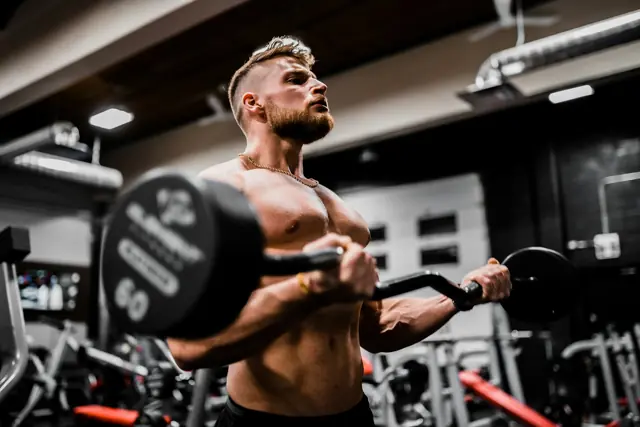
Arms exercise
Dumbbell Curl
The dumbbell curl is the simplest way to train the biceps directly. Strict reps with a full range of motion build the front of the upper arm more than any amount of heavy swinging.
 By Khushi Gupta Reviewed October 2026
- Primary
- Arms
- Also works
- Brachialis, Brachioradialis, Forearms
- Equipment
- Dumbbells
- Level
- Beginner
How to do it
- Stand tall holding a dumbbell in each hand at your sides, palms facing your thighs.
- Pin your elbows lightly to your sides and brace your abs.
- Curl one or both dumbbells up, turning your palms to face the ceiling as they rise.
- Keep your upper arms still and lift until the dumbbells are near your shoulders.
- Squeeze the biceps for a moment at the top.
- Lower slowly over two to three seconds until your arms are fully straight.
Coaching cues
- Elbows stay by your sides
- Turn the pinky up
- Slow on the way down
- Full stretch at the bottom
Common mistakes and fixes
Swinging the torso to lift the weight
Use a lighter dumbbell or brace against a wall so only your elbows move.
Elbows drifting forward
Keep the upper arm close to vertical. Forward elbows let the front delts take over.
Half reps
Lower until your arms are straight. The stretched part of the curl matters for growth.
Dropping the weight on the way down
Control the lowering; it should take longer than the lift.
Sets and reps
| Goal | Prescription |
|---|---|
| Strength | 3 sets of 6-8 reps, 90 seconds rest |
| Hypertrophy | 3-4 sets of 8-15 reps, 60-90 seconds rest |
| Beginner | 2-3 sets of 10-12 reps per arm |
Pick a starting weight with the one rep max calculator, and load the bar with the plate calculator.
Variations
- Hammer curl Palms facing each other to target the brachialis and forearms.
- Incline dumbbell curl Lying back on an incline bench stretches the long head of the biceps.
- Preacher curl Arms supported on a pad prevents cheating.
- Barbell curl Lets you load both arms more heavily.
Muscles worked
The biceps brachii bends the elbow and turns the palm up, which is why twisting the dumbbell as you curl increases its involvement. The brachialis sits underneath and adds thickness, and the brachioradialis in the forearm assists.
Benefits
Compound pulls like pull-ups and rows train the biceps too, but direct curls add volume that most people need for visibly bigger arms. A few hard sets twice a week is enough.
Strong biceps and elbow flexors also help protect the elbow during heavy pulling.
Safety and who should modify it
Curls are low risk. If your wrists or elbows ache, try hammer curls or an EZ-bar, which put the joints in a more natural position.
Frequently asked questions
Alternating or both arms together?
Both work. Alternating lets you focus on one arm at a time; together saves time. Use whichever lets you keep strict form.
How heavy should my curls be?
Heavy enough that the last two or three reps of each set are hard, but light enough that you can keep your elbows still.
How often should I train biceps?
Two sessions a week with 6 to 10 total hard sets, counting rows and pull-ups partially, is plenty for most people.
Plans that use the dumbbell curl
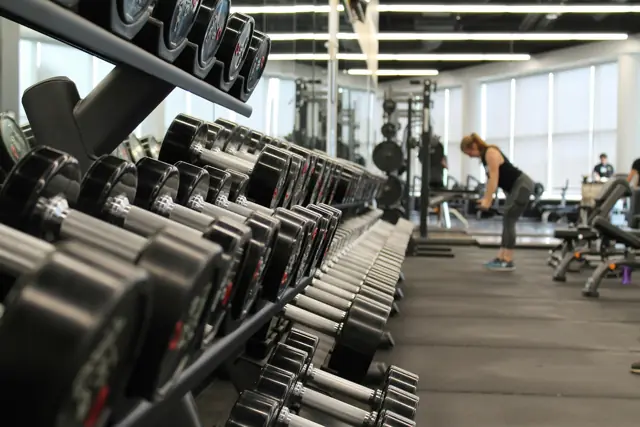 Intermediate · Muscle gain
Push Pull Legs Split
A 6-day push pull legs routine for building muscle. Full schedule with sets, reps and rest times, plus how to progress, deload and adjust it.
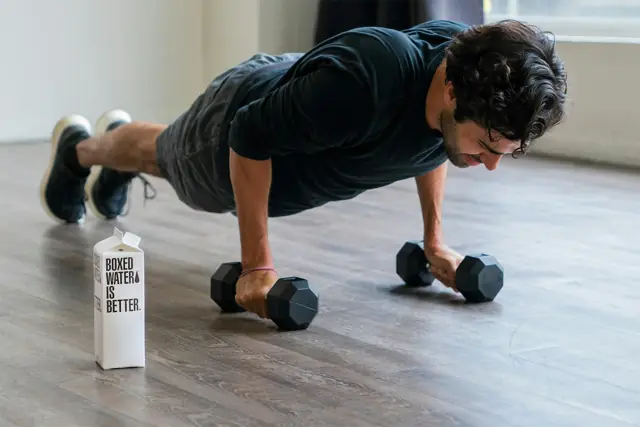 Beginner · General fitness
Home Dumbbell Workout
A 4-day home workout plan using only dumbbells and bodyweight. Upper and lower sessions, sets and reps, and how to keep progressing with limited weights.
Related exercises
 Back · Intermediate
Pull-Up
Pull-up bar
 Back · Beginner
Lat Pulldown
Cable pulldown machine
 Arms · Intermediate
Tricep Dip
Parallel bars or dip station